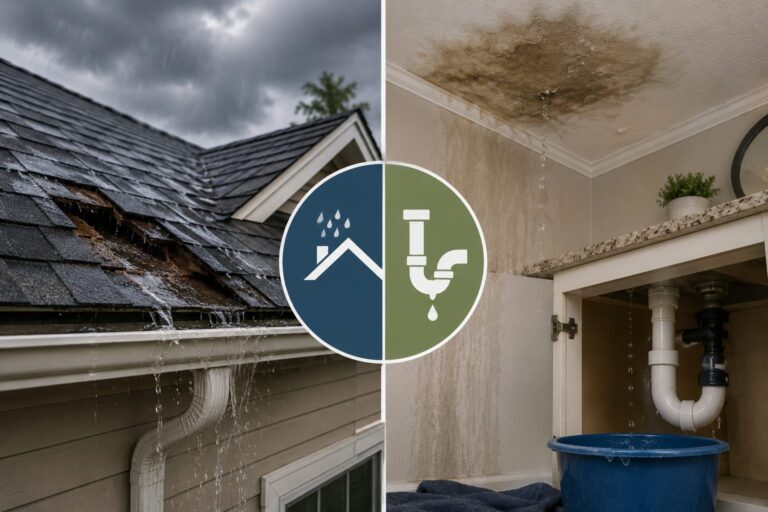

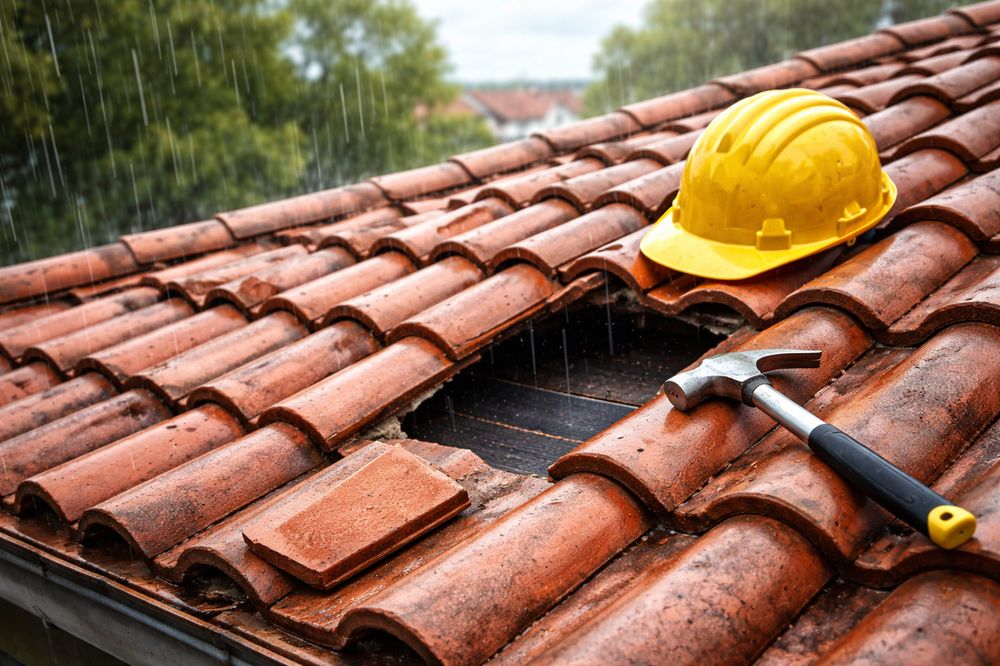
You’ve discovered a tile missing from your roof. Maybe you saw it fall during a storm. Maybe you noticed the gap during gutter cleaning. Your immediate thought is probably: “Will this cause a leak?”
The honest answer is complicated. A single missing tile doesn’t automatically mean water is currently leaking inside your home. But it does mean water will leak inside your home if it rains, sometimes within days. The real question isn’t whether a leak will happen eventually. It’s how fast, and how much damage will occur before you address it.
Understanding the mechanics of how roof tiles protect your home, what happens when one goes missing, and how quickly damage develops helps you make informed decisions about urgency and appropriate response.
How Roof Tiles Actually Protect Your Home
Most homeowners don’t realise how roof tiles work. They assume tiles are simply surface protection. They’re more sophisticated than that.
Roof tiles overlap like fish scales. Each tile sits on top of the tiles below it. Water running down the roof flows over the edge of each tile and onto the next tile below. A single tile sitting in the right position can shed water that flows across multiple tiles above it.
The overlapping pattern is critical. Water hits the upper tiles, flows down, and the overlap directs it onto the next row. If one tile is missing in the middle of this chain, water follows a different path. Instead of flowing over the tile below, water flows into the gap where the tile should be.
What’s underneath the tiles? That’s the key to understanding whether you’ll get a leak.
The roof structure beneath tiles:
- Wooden roof battens (horizontal strips supporting the tiles)
- Underlaying (typically a breather membrane or felt)
- Rafters and structural timber
- Insulation
- Interior ceiling
Modern roofs (built in the last 30+ years) typically have underlaying. This is a protective membrane that’s designed to catch water that gets past the tiles. It’s not waterproof indefinitely, but it provides a secondary defence.
Older roofs (pre-1980s) sometimes have no underlaying, just felt, or felt that’s degraded. In these cases, water passes straight through into the structure.
Will Water Actually Get In?
The presence of water inside your home depends on several factors working together.
1. Rain intensity and direction
A single missing tile during light rain might not cause interior leaking. Light rain falls relatively vertically. Water flows over tiles and doesn’t necessarily find the gap.
Heavy rain or rain with strong wind is different. Wind-driven rain hits your roof at angles, not vertically. Water gets pushed sideways into gaps. It finds the missing tile. It gets behind the underlaying. Water starts flowing inside.
Coastal properties experience particularly wind-driven rain. Rain doesn’t fall vertically. It comes horizontally, propelled by coastal winds. A missing tile 50 metres from the sea will leak within hours of rain. A missing tile 20 kilometres inland might not leak during light rain, but will leak during storms.
Think about your property’s exposure. Are you on a windswept hillside? Near the coast? In a sheltered valley? Exposure influences how quickly a missing tile causes interior leaking.
2. Underlaying condition
If your roof has modern underlaying (breathable membrane from the last 20 years), water that gets past the missing tile will be caught by this layer. It will temporarily sit on the underlaying, flowing towards the gutters and edges. If the membrane is intact and properly installed, water won’t enter the interior immediately.
The “immediately” is key. Even with underlaying, water will eventually saturate the membrane, find its way through seams or damage, or accumulate until it breaches into the interior.
If your roof has no underlaying or degraded felt (common in homes built before 1980), water passes straight through. Interior leaking can start within hours.
3. The missing tile’s location
A missing tile at the roof peak (apex) is less critical than a missing tile partway down the roof. Water flows downhill. A tile missing halfway down the roof creates a path for water flowing from the upper tiles to move sideways and downward into the structure.
A tile missing at the very top is actually slightly less problematic because water has to come from the peak area itself, which is minimal.
A missing tile near the gutter is problematic. Water accumulates here and takes time to flow away.
4. Roof pitch and water flow
A steep roof (50 degrees pitch or higher) sheds water quickly. Water doesn’t sit on the surface. It flows rapidly away from missing tiles.
A shallow roof (30 degrees pitch or less) allows water to sit longer. Water has time to find gaps and work its way into structure.
A very shallow roof (modern flat or nearly-flat roofs) is the worst case. Water pools. It finds every gap and weakness. A missing tile on a shallow roof will leak almost certainly within days of rain.
The Timeline From Missing Tile To Interior Leak
Understanding how quickly water inside your home can develop helps you understand urgency.
Scenario 1: Modern roof with underlaying, steep pitch, inland location
Day 1 (missing tile discovered): Water flows into the gap. Some hits underlaying. Some flows back out the gap.
Days 1-3 (light rain): Water sits on underlaying. Underlaying sheds most water towards edges and gutters. Interior stays dry.
First heavy rain or storm: Wind-driven rain forces water past underlaying. Water begins accumulating on structural timber. Interior ceiling begins showing dampness.
Within one week of the first heavy rain: Water damage inside becomes visible as damp patches or staining on interior ceiling.
Timeline: 1-7 days depending on weather.
Scenario 2: Older roof with no underlaying, shallow pitch, coastal location
Day 1 (missing tile discovered): Water flows directly into the gap. No underlaying to catch it. Water flows through to rafters.
Within 6-12 hours of rain: Water reaches interior structure. Ceiling shows damp patches.
If not fixed: Structural rot develops. Mould grows. Interior damage accelerates.
Timeline: Hours to days.
Scenario 3: Flat or nearly-flat modern roof with underlaying
Day 1 (missing tile discovered): Water flows into the gap. Because the roof is nearly flat, water pools in this area.
Days 1-3: Water accumulates, seeps through seams in underlaying, finds weak points. Interior shows dampness within days.
Timeline: 2-5 days.
These scenarios show that “will a missing tile cause a leak?” has different answers depending on your roof type, location, and weather. But they all share a common point: water will eventually get inside if the tile isn’t replaced.
The question isn’t whether it will leak. The question is when.
What Happens If You Ignore It
Leaving a missing tile unrepaired triggers a cascade of damage.
Week 1-2: Water begins accumulating on interior surfaces. Ceiling shows damp patches. You notice water staining.
Week 2-4: Damp patches expand. Interior paint begins peeling. Insulation becomes saturated. Wooden structural elements begin absorbing water.
Week 4-8: Mould begins growing on damp surfaces. This is a health hazard, particularly for children and people with respiratory conditions. Musty smells appear.
Month 2-3: Structural timber begins rotting. This isn’t visible immediately, but rot is developing inside the wood. Insulation has lost effectiveness. Your heating bills begin rising because insulation is wet and no longer insulating.
Month 3-6: Rot progresses. Structural integrity is compromised. Roof deterioration accelerates because water is now affecting adjacent areas. What started as one missing tile is now multiple tiles affected.
Month 6+: Serious structural damage. Repairs now cost thousands instead of hundreds. Entire roof sections might need replacement.
A missing tile ignored for three months costs roughly five times as much to repair as fixing it immediately. A missing tile ignored for six months costs ten times as much.
The Financial Reality
Hiring a professional roofer like Point Roofing for replacing a single roof tile costs £50-120 in labour. If you do it yourself (assuming you’re comfortable on a roof), it’s essentially free beyond the tile cost (£5-15).
Fixing interior water damage from an unrepaired missing tile costs:
- Initial drying and remediation: £500-1,500
- Mould treatment if mould has developed: £1,000-3,000
- Insulation replacement: £2,000-5,000
- Structural timber repairs if rot has started: £3,000-10,000+
- Interior decoration (repainting, replastering): £1,500-3,000
Total damage cost: £8,000-22,000+ for a single missing tile ignored for several months.
You’re choosing between spending £30-80 immediately or £8,000-22,000 later. The mathematics are stark.
How To Check If Water Is Already Getting In
Before replacing the tile, assess whether water has already entered your home.
In the attic or roof space:
- Look for damp patches on wooden rafters or structural timber
- Check for water staining
- Look for mould growth (usually black or green discolouration)
- Check whether insulation is damp (it should feel dry)
- Smell for musty odours indicating moisture problems
In the interior ceiling below the missing tile:
- Look for water staining
- Look for damp patches or soft areas in the ceiling
- Look for signs of mould
- Check whether paint is bubbling or peeling (sign of moisture behind it)
Timing is key: Check immediately after rain. Moisture is easier to detect when present. Checking on a dry day might miss moisture that’s still drying.
If you find evidence of moisture, the situation is urgent. You need the tile replaced immediately and potentially professional assessment of water damage.
If there’s no evidence of moisture, the missing tile hasn’t caused interior leaking yet. But it will, particularly when heavy rain occurs.
Emergency Temporary Fixes
If you can’t replace the tile immediately, temporary measures reduce water entry.
Tarpaulin coverage – A tarpaulin secured over the missing tile area redirects water. This is temporary, not a solution, but it buys time if heavy rain is forecast.
Temporary flashing – Some roofers can install temporary flashing to redirect water. This is more effective than tarpaulin but still temporary.
Interior moisture management – Opening windows, using dehumidifiers, and ensuring good ventilation reduce moisture accumulation if water is getting in.
Professional assessment – If you’re uncertain whether water is already entering, a surveyor or roofer can assess the situation and advise on urgency.
These are interim measures while you arrange permanent repair. They’re not solutions.
Replacing The Missing Tile
Replacing a roof tile is straightforward but requires working at height safely.
The process:
- Remove the tiles directly above the missing tile
- Slide the new tile up into position
- Ensure overlaps are correct
- Secure the tile (modern tiles are often nailed or clipped)
- Replace tiles above
Cost varies by location:
- Single tile replacement: £30-80
- If additional tiles need replacement: £30-80 per tile
- If underlaying is damaged during removal: additional £100-300
This is modest cost. The urgency is that delaying this modest expense leads to massive expense later.
Roof Inspection After Missing Tiles
Once you’ve identified one missing tile, assume others might be loose or damaged.
A missing tile is often a sign of a larger roof problem. Wind damage might have loosened multiple tiles. Weather exposure might be affecting several areas.
After replacing the missing tile, conduct a visual roof inspection (from the ground with binoculars or from the gutters if safe). Look for:
- Other loose tiles
- Damaged tiles with cracks
- Tiles sitting at odd angles
- Areas where tiles don’t overlap properly
If you find additional damage, address it promptly. One missing tile often indicates vulnerability to others becoming missing.
Your Decision On Urgency
Here’s how to assess your specific situation:
Replace immediately if:
- Your roof has no underlaying (pre-1980 construction)
- Your property is coastal or exposed to wind
- Your roof is shallow-pitched
- Your area is forecast to have heavy rain soon
- You’ve found evidence of interior moisture
Replace within days if:
- Your roof is modern with underlaying
- Your area has normal rainfall patterns
- Your roof is steep-pitched
- No interior moisture is evident
Don’t delay beyond one week:
- Even low-risk missing tiles will leak eventually
- Weather forecasts change
- The cost difference between immediate replacement and water damage is enormous
One missing tile discovered right now requires action this week, not “when you get around to it.”
A single missing roof tile doesn’t automatically mean water is currently leaking. But it does mean water will leak, often within days of heavy rain, if the tile isn’t replaced. The real question isn’t whether it will leak. It’s how much damage will occur while you delay.
The cost of replacing one tile is negligible. The cost of not replacing it is substantial. This is one of the few home maintenance situations where the decision is clear: address it immediately, not eventually.