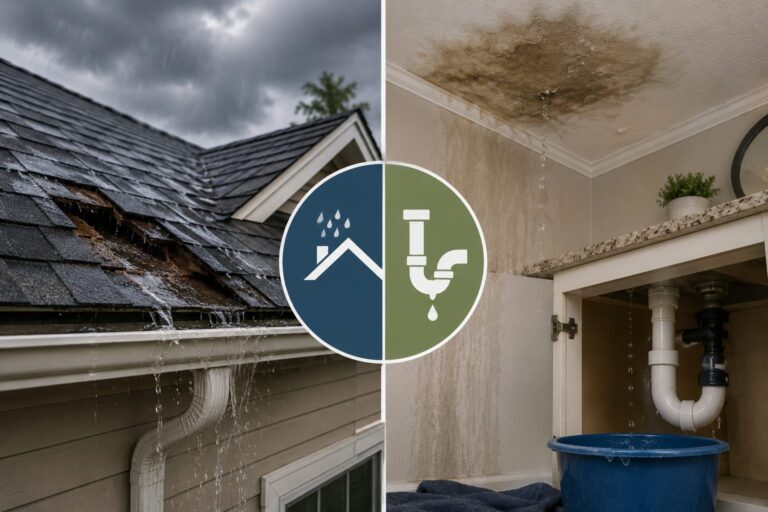

Your roof tiles are just the beginning. Beneath them lies a carefully constructed system designed to keep your home dry, warm, and structurally sound. If those layers fail, you’re not just looking at damaged tiles, you’re facing water damage, mould, and potentially thousands of pounds in repairs.
But what exactly should be under those tiles? And does your roof have everything it needs? Find out below as the Point Roofing team explain.
The Purpose of Roof Underlayment
Roof tiles alone cannot protect your home. Think of them as the first line of defence, not the only one. They shed water, yes, but they also shift and settle over time. Wind forces water underneath them. Frost causes them to crack. They’re not perfect and they don’t need to be, as long as what’s underneath them is doing its job.
The layers beneath your tiles serve several critical functions:
- Stopping water penetration – Acting as a backup barrier when rain finds its way under the tiles
- Reducing condensation – Allowing moisture to escape whilst preventing it from entering the property
- Providing insulation value – Contributing to your home’s thermal efficiency
- Supporting the roof structure – Adding rigidity and load-bearing capacity
- Protecting workers and materials – Creating a safer working environment during installation and repairs
Without these layers working in harmony, your roof fails and requires a re-roof, not spectacularly, but gradually. Water seeps in slowly. Timbers rot. Your energy bills climb. Problems that started under the tiles end up costing far more to roof fix than the original investment in proper underlayment.
Sarking or Roof Lining
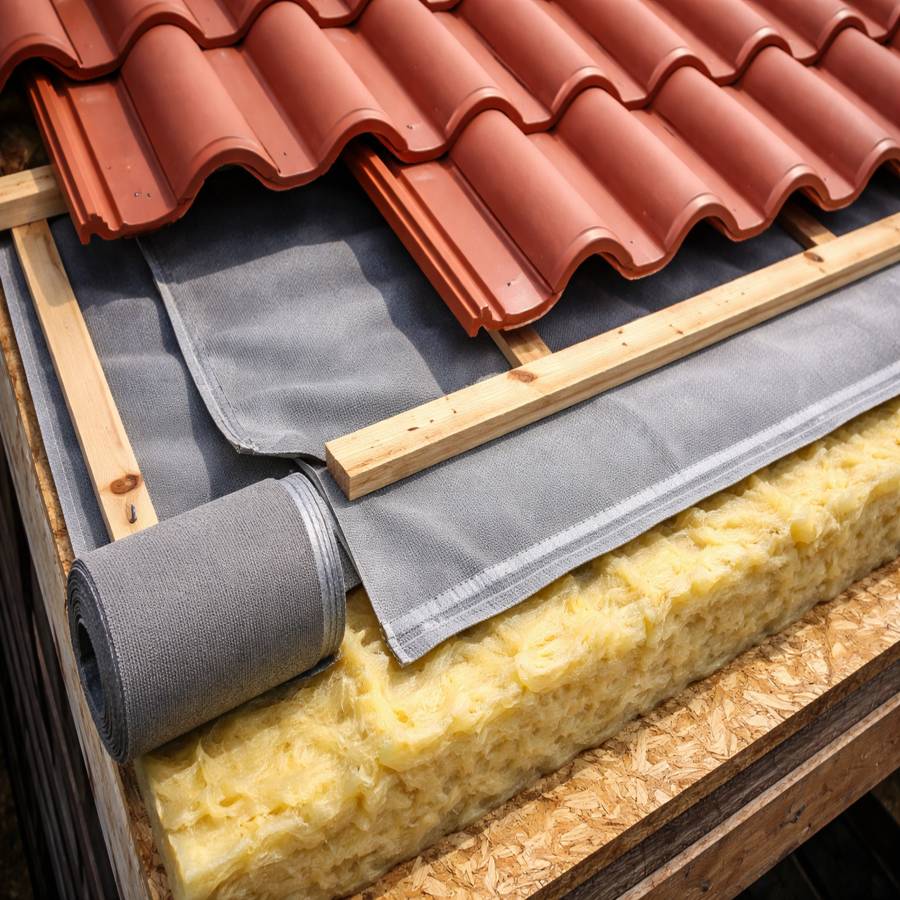
The first layer directly beneath your tiles is typically sarking (also called roof lining or underlayment). This is one of the most important decisions in roof construction, yet many homeowners don’t even know it exists.
Sarking usually comes in two forms:
Solid Sarking
Some older homes and high-specification newer builds use solid sarking, typically timber boards, plywood, or osb (oriented strand board). This creates a completely rigid base for the tiles. It provides maximum support and creates an effective vapour barrier.
Solid sarking was standard practice decades ago. You’ll find it in Victorian and Edwardian properties across Norwich and the surrounding regions. The challenge? Modern buildings move and settle differently. Solid sarking can sometimes trap moisture, leading to timber degradation if ventilation isn’t managed correctly.
Breathable Membrane Sarking
Modern builds almost always use breathable underlayment membranes. These are synthetic or bitumen-based sheets that allow water vapour to escape whilst blocking liquid water. They’re typically installed in a single layer directly under the tiles and is often what the Point Roofing team use.
The key difference is in the word “breathable.” Traditional felt (still used in some properties) traps moisture. Breathable membranes let it through. Your timbers stay drier. Your loft stays warmer. Your roof lasts longer.
Quality matters enormously here. A cheap membrane might last 15 years. A premium one lasts 40 years or more. Given that replacing roof underlayment means removing all your tiles, is the cheaper option really worth it?
The Battens
Directly under the sarking (or membrane) sits the batten system. Battens are thin timber strips, usually 50mm x 25mm, that run horizontally across your roof rafters.
What do they actually do?
Creating the ventilation channel
This is crucial. Battens sit on top of your rafter feet, creating a gap between your underlayment and the space below. Air can flow through this channel. Moisture escapes. Your roof structure stays dry.
Providing something to nail into
Your roof tiles need something to grip. Battens give you that. Without them, you’d be nailing tiles directly into membrane or solid sarking. The tiles would hold initially, but movement over time would damage the underlayment. Battens act as a buffer.
Creating a level surface
Rafters aren’t always perfectly straight, particularly in older properties. Battens can be shimmed and adjusted to create a level, true surface for tiling. Straight battens mean straight tiles, which means better water runoff and a better-looking roof.
The spacing between battens matters too. It’s determined by your tile size and the pitch of your roof. Standard roof tiles typically sit on battens spaced 340mm apart. Spanish tiles might be 400mm. Get this wrong, and tiles can sag between battens or crack under their own weight.
Counter-Battens and Ventilation
Here’s where roof design gets genuinely interesting. Between your rafters and your sarking, there’s often a second layer of battens running vertically, these are counter-battens.
Counter-battens create a second ventilation channel. One gap allows moist air to rise. Another allows it to escape. It’s a deliberate path for moisture to follow, taking it away from your timbers and out through the roof vents at the ridge and soffit.
Is this layer always necessary? Not quite. In well-designed, well-ventilated roofs with quality breathable membranes, you might manage without it. But in older properties with existing damp issues, or in climates where humidity is high, counter-battens provide genuine protection against timber rot.
They cost relatively little to install during new construction. Retrofitting them during a roof replacement is more expensive. Yet the cost is small compared to treating dry rot in your roof timbers.
Insulation and the Vapour Barrier
Below the rafter system, you typically find insulation. This might be bulk insulation like mineral wool, or modern spray foam. The purpose is straightforward, reducing heat loss through your roof.
But insulation creates a problem: it’s warm on the top surface, cool on the bottom. That temperature difference causes condensation. Warm, moist air rises from inside your home, hits the insulation, and water droplets form.
This is why you need a vapour barrier beneath your insulation, typically a polyethylene sheet or kraft paper backing. It blocks warm, moist air before it reaches the insulation.
Here’s the critical part: your vapour barrier must be continuous. Any gap, any penetration, any pinhole allows moist air through. During installation, these barriers should be taped at all seams and carefully sealed around any pipes, wires, or fixtures passing through.
Many poorly constructed roofs have gaps in the vapour barrier. The insulation stays damp. Its effectiveness drops by up to 30 percent. Mould can develop in the worst cases.
The Rafter Spaces and Airflow
Between your rafters sits empty space (or insulation). This space serves a purpose beyond just holding insulation. It’s part of your ventilation system.
Air needs to flow from the soffit vents at the eaves up to the ridge vents at the peak. This creates natural convection, continuously removing moisture from your roof structure.
When rafter spaces are blocked, perhaps by insulation pushed too far up, or by bird netting installed incorrectly, this airflow stops. Moisture accumulates. Timber rots from the inside out, completely invisible until it’s too late.
Proper rafter ventilation should provide a clear path. Baffle boards (foam or plastic dividers) often guide air from soffit to ridge, ensuring nothing blocks the flow.
What Goes Wrong And Why
Understanding what should be under your tiles means understanding what commonly fails:
- Poor membrane quality – Cheap underlayment fails prematurely, leaving timbers exposed to slow water penetration
- Blocked ventilation – Insulation or debris blocking airflow allows moisture accumulation
- Continuous vapour barrier – Gaps in the vapour barrier let interior moisture reach the roof structure
- Incorrect batten spacing – Tiles unsupported properly can crack, allowing water underneath
- Missing counter-battens – In high-humidity areas, condensation builds up without a proper ventilation path
- Inadequate insulation – Creates excessive temperature differentials and condensation problems
Each of these issues starts silently. You don’t notice until water damage appears inside, or until you have tiles replaced and the contractor finds rotten timbers.
Getting It Right
Your roof’s performance depends on layers working together as a system. Quality tiles matter. But they matter far less than what sits beneath them.
When you’re planning a roof replacement or new build, ask specific questions about underlayment specification. What membrane is being used? What’s its lifespan rating? Are ventilation paths clear and unobstructed? Is the vapour barrier continuous?
The difference between a roof lasting 40 years and one failing at 25 is often invisible, it’s the layers underneath your tiles doing exactly what they’re supposed to do, quietly protecting your home year after year.
That’s worth investing in properly from the start.