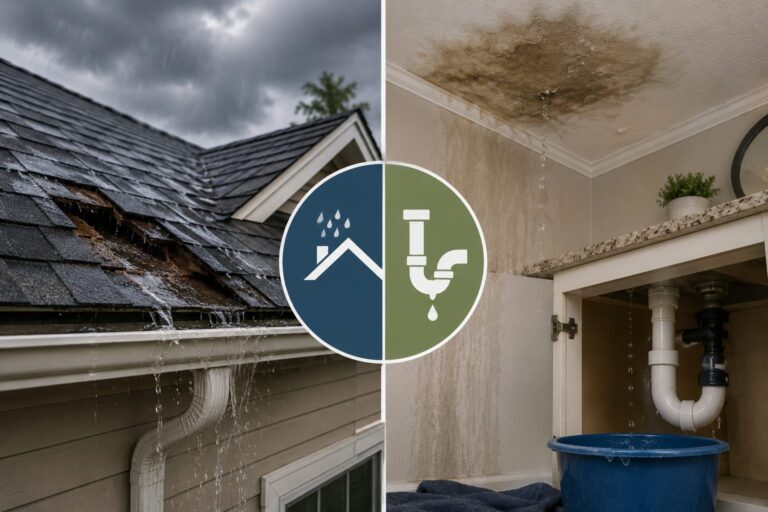

Most people don’t think about their roof until water appears somewhere it shouldn’t. A damp patch blooms on the bedroom ceiling. A tile shows up in the garden after a windy night. The surveyor’s report comes back with a phrase like “further investigation recommended” and suddenly you’re Googling things you never expected to Google.
By that point, you’re already on the back foot.
So let’s talk about roof tiles before there’s a problem, specifically, how long different types actually last, and what that means for your home and your wallet.
Concrete Roof Tiles
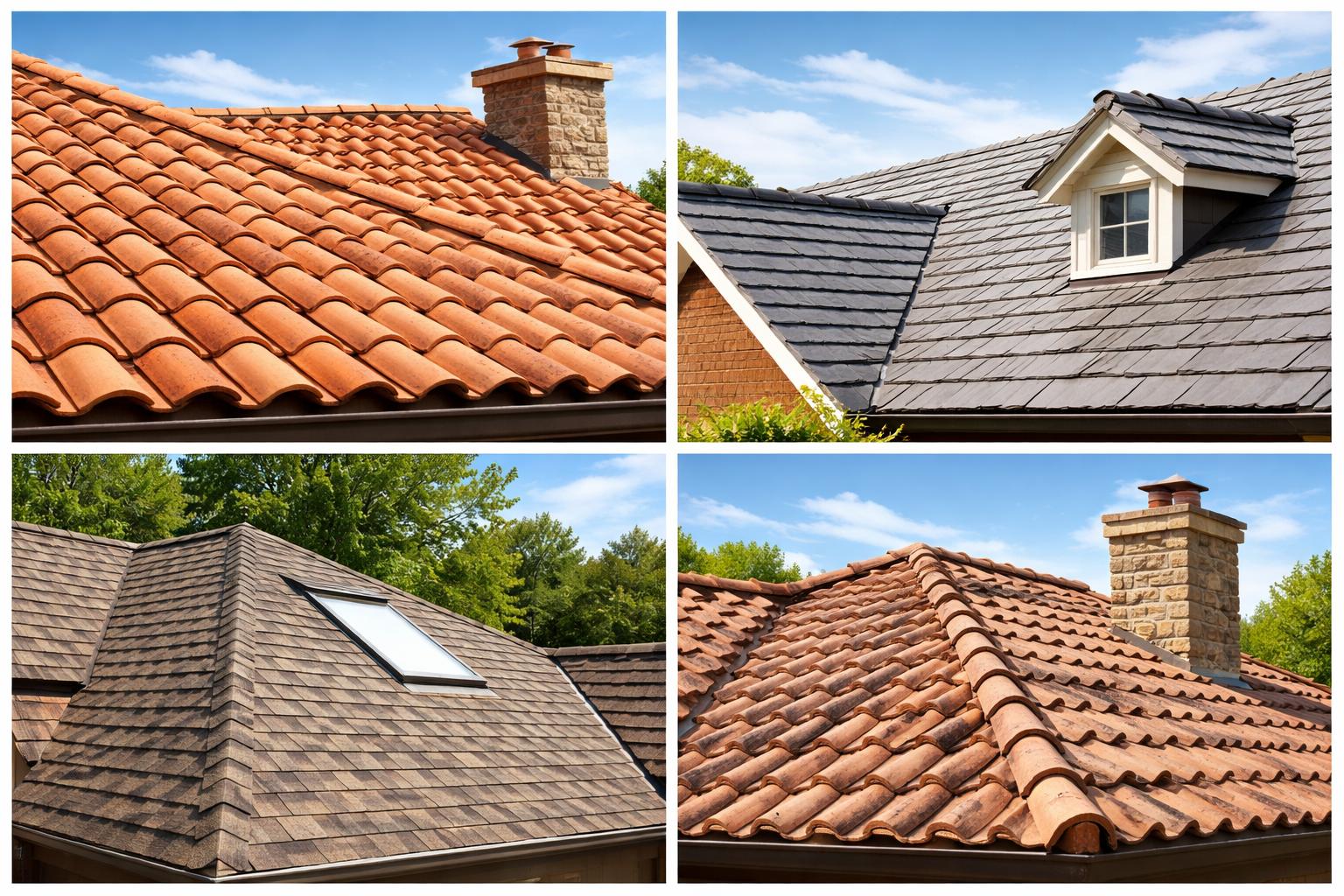
Concrete tiles are the workhorses of the British roofline. They’re not glamorous. Nobody looks at a house and says “oh, beautiful concrete tiles.” But they went on tens of millions of homes from the 1950s onwards for a reason, they’re affordable, they’re practical, and most decent roofers can fit them in their sleep.
Expected lifespan: 30 to 50 years
Thirty to fifty years sounds like a long time. And it is, mostly. But here’s the thing, concrete tiles don’t tend to fail dramatically. They age quietly, gradually, in ways you might not notice until the damage is already done.
What usually goes first isn’t the tile itself. It’s the surface coating. That protective outer layer slowly weathers away under years of UV exposure and British rainfall. Once it’s gone, the tile starts absorbing water more readily. Then winter arrives. That water freezes, expands inside tiny surface pores, and the tile cracks — almost imperceptibly at first. By the time you can see real deterioration from the ground, the process has often been going on for years.
If you’re in the north of England or Scotland, where winters are properly cold, that freeze-thaw cycle works harder and faster. The same tile might comfortably reach 50 years in Surrey and start looking rough at 35 in the Scottish Borders.
A few other things that quietly chip away at a concrete tile roof’s lifespan:
- Moss and lichen aren’t just ugly, they hold moisture against the tile surface, accelerating exactly the kind of water damage described above
- Overhanging trees keep sections of the roof permanently damp and dump debris that blocks drainage
- Crumbling ridge mortar lets water funnel directly into the roof structure, often for months before anyone notices
- A poorly ventilated loft traps humidity that attacks everything from beneath
The good news is that a professional clean and re-seal genuinely extends life. For a typical semi-detached it costs somewhere between £500 and £1,500. That’s not a trivial sum, but compare it to a full re-roof, which can easily run to £8,000 or more and suddenly it starts to look like excellent value.
Clay Roof Tiles
Clay tiles belong to a different category of material entirely. Not better in every way, but older, more proven, and in many respects more forgiving over the long term.
Expected lifespan: 60 to 100+ years
Walk through any market town in Norfolk, Suffolk, or the Cotswolds and you’ll see clay pantiles that have been sitting on those roofs for well over a century. They’re not architectural curiosities, they’re just tiles that were made well and left alone. That’s a genuinely remarkable track record.
The reason they last so long is simple. Clay is dense and naturally low in water absorption. It doesn’t soak up rain and hold it against itself the way concrete does. It handles UV better too, a clay tile can still look reasonable at eighty years old, while a concrete tile of the same age might be visibly eroding. Put them side by side and the difference is striking.
The trade-off is brittleness. Clay doesn’t flex. Step on it wrong, drop something on it, or get an unlucky branch fall during a storm and you’ll hear the crack. It’s not a forgiving material in that respect.
There’s also a subtlety that catches a lot of homeowners off guard. Even on a roof with perfect clay tiles, you’ll almost certainly need significant work at around the 40-year mark. Not because the tiles have failed, they probably haven’t but because everything underneath and around them has. The mortar bedding. The underlay. The lead flashings. The timber battens. All of that has a shorter life than the tiles themselves.
The tiles can often be carefully removed, set aside, and relaid once the structural work is done. It’s more expensive than a straightforward re-roof, but you’re preserving something that has decades of life left in it. On a period property, it’s usually the right call.
Slate Roof Tiles
Natural slate is in a different conversation entirely. If you want a roof that will genuinely outlive you and possibly your children, this is what you’re looking for.
Expected lifespan: 80 to 150+ years
There are slate roofs in North Wales and the Lake District quietly heading towards their second century. Not as museum pieces. As working roofs, keeping buildings dry, doing exactly what they were put there to do. The material is extraordinarily dense, absorbs almost no water, and handles everything the British climate throws at it with something close to indifference.
Not all slate is the same, though, and this matters more than the industry sometimes acknowledges. Welsh slate is the gold standard, tight grain, very low water absorption, an almost unparalleled track record. The quarries at Penrhyn and Dinorwig have been producing roofing slate for centuries, and the material from those quarries has earned its reputation.
Spanish slate is far more common on UK roofs now because it’s significantly cheaper, and it performs well, typically 75 to 100 years with proper installation. Brazilian slate is also used, though the quality variation between batches is wider. If you’re specifying slate for a new roof, it’s worth having a conversation about origin, not just price.
So why do slate roofs ever fail, given all of this?
The most common answer is nail sickness, which sounds almost quaint but is a genuinely serious problem. The iron or steel nails holding slates in place corrode over decades. As they rust, they expand slightly, eventually splitting the slate from within or losing their grip entirely. A roof that looks fine from the street might have slates held in place by almost nothing. One decent storm and you’d know about it.
At around the 80 to 100-year mark, many slate roofs need a complete re-nail. The slates themselves are often in excellent condition, it’s purely the fixings that have given up. Individual repairs are also very manageable. A broken slate typically costs £75 to £150 to replace, all in. Slate doesn’t force you into expensive all-or-nothing decisions the way some other materials can.
Synthetic Roof Tiles
Synthetic tiles — made from rubber, polymer, or composite fibres are the newest category on this list, and they come with a significant asterisk.
Expected lifespan: 40 to 50 years (manufacturer estimates)
The asterisk is this: nobody actually knows. The claims are credible. The warranties, often 50 years, sound reassuring. But the oldest synthetic tile installations are only 20 to 30 years old. There is no long-term real-world evidence for the upper end of these projections. The warranty and the proof are not the same thing, and it’s worth keeping that distinction in mind.
What early performance data does suggest is encouraging. Synthetic tiles resist moss and algae better than concrete, handle frost well, and because they’re much lighter than clay or slate, they can go on roofs that couldn’t support heavier materials.
Where some installations have struggled is UV degradation, surface fading and cracking in more exposed, south-facing locations. Quality varies significantly between manufacturers too. Treat “synthetic tile” as a category to research carefully, not a single reliable product.
Fibre Cement Tiles
Fibre cement tiles look like slate at a distance. Up close, or after a few years of weathering, the difference becomes more apparent. They’re made from cement, sand, and cellulose fibres, and they sit at the budget end of the slate-lookalike market.
Expected lifespan: 25 to 40 years
They do the job, but they’re the most weather-sensitive of the mainstream options. In areas with heavy or persistent rainfall and large parts of the UK qualify, moisture absorption gradually takes its toll. Surfaces erode. Tiles become fragile. They don’t age with any particular grace.
If budget is genuinely the constraint and you need something that looks like slate, fibre cement is a reasonable short-term answer. Just be honest with yourself about the timeline. You will be revisiting this decision sooner than you would with most other materials.
What Really Determines How Long a Roof Lasts?
The tile type is the starting point, not the whole answer. Two houses on the same street with identical roofs can tell very different stories depending on a handful of factors that are entirely within your control.
Who installed it matters more than most people think. Incorrect tile overlap, badly seated flashings, and poor mortar work don’t show up immediately. They show up five or ten years later, by which point the damage is already done and the roofer is long gone. The cheapest quote for a re-roof is rarely the cheapest outcome over time. This is why Point Roofing always provide high quality workmanship at a fair price.
Ventilation is invisible until it isn’t. A poorly ventilated roof space traps moisture. That moisture slowly attacks the timber structure, the underlay, and in some materials, the tiles themselves. Adequate ventilation isn’t a nice-to-have — it’s what stops your roof rotting quietly from the inside.
Small maintenance prevents large bills. Gutter clearing costs £50 to £150. Blocked gutters left to overflow cause water ingress, timber decay, and damp spreading into walls. The maths isn’t complicated, but most homeowners still don’t clear their gutters regularly enough.
Where you live changes the equation. A coastal property in Norfolk deals with salt-laden air that corrodes fixings faster than anywhere inland. An exposed property in Cumbria faces more freeze-thaw cycles per winter than the same house in Hampshire. The tile specification that’s fine in one location is under significantly more stress in another.
The Honest Answer on Which Tile Is Worth It
If you’re planning to stay in a property for the long term and never want to have this conversation again, natural slate is the rational choice. The upfront cost is higher. Everything else about it, the lifespan, the per-year cost, the minimal maintenance burden, argues in its favour.
For most homeowners working with a realistic budget, good quality clay or concrete tiles are entirely sound decisions. They’re well understood, widely available, and perform reliably when properly fitted and occasionally looked after.
But here’s something that almost never gets said plainly enough: who fits your roof matters more than what’s on it. A careful, experienced roofer using standard concrete tiles will give you a better outcome than a careless one using premium Welsh slate. The material is only as good as the installation.
When did your roof last have a proper inspection? Not a glance from the garden, an actual look, by someone who climbs up and checks the details. Most roofing problems that turn into expensive emergencies were small, fixable issues six months earlier.
The roof doesn’t ask for much. But it does ask to be remembered occasionally.